
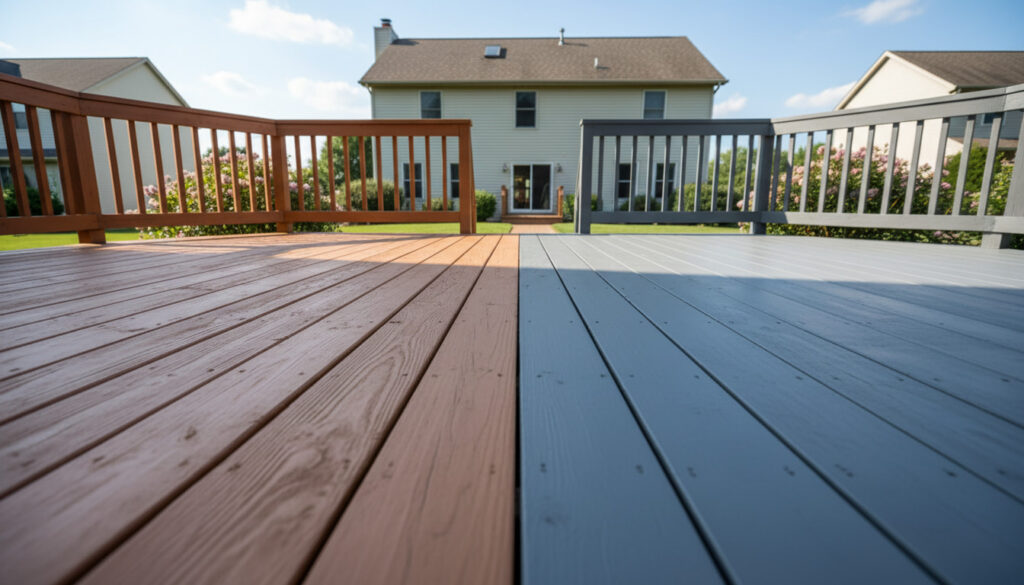
As deck specialists at Surecoat Painting in Ohio, we often get asked: “Should I paint or stain my deck?” The answer depends on your goals and deck condition, but generally stain is the better choice for wood decks. Stain soaks into the wood fibers, protecting them from moisture and sun damage without forming a flaky shell. In contrast, paint “sits on the surface” of the deck and will eventually crack and peel. In fact, experts point out that paint “sits on the surface” and must be scraped off and redone when it wears out, whereas stain penetrates deep into the wood to “waterproof” and seal it. In practical terms, a stained deck resists weathering far better over time, while a painted deck may need more frequent major repairs or recoating.
That said, your specific situation matters. Paint offers more color and finish options and will completely cover wood grain and imperfections. This makes it useful if your deck is very old or you want a bold new look. Stain, by contrast, highlights the wood’s natural beauty. It lets the grain show through and gives a richer “rustic” appearance. For most newer or well-maintained decks, we recommend staining to preserve the wood. If a deck is older, cracked, or heavily weathered, painting can give it a fresh, uniform look.
Why Choose Stain?
Staining a deck means the finish is absorbed into the wood, not just layered on top. This brings several benefits:
- Natural look: Stains let the wood’s grain and color show through. A stained cedar or pine deck looks warm and inviting.
- Deep protection: Oil-based stains soak into wood fibers, sealing them against water and UV rays.
- No peeling: Because stain becomes part of the wood, it won’t chip or flake off. A stained deck weathers evenly, without the large flakes you can get with paint.
- Easier maintenance: Staining is usually easier to refresh. In most cases, you just clean the deck and reapply stain – no heavy sanding or priming needed. This makes routine upkeep straightforward.
- Safer footing: Stained wood remains somewhat textured, so decks are less slippery when wet than with a glossy paint finish. Many families find stains give better traction for bare feet and pets.
- Lower initial cost: Stain products and labor are generally cheaper (fewer coats needed) than painting.
Drawbacks of stain:
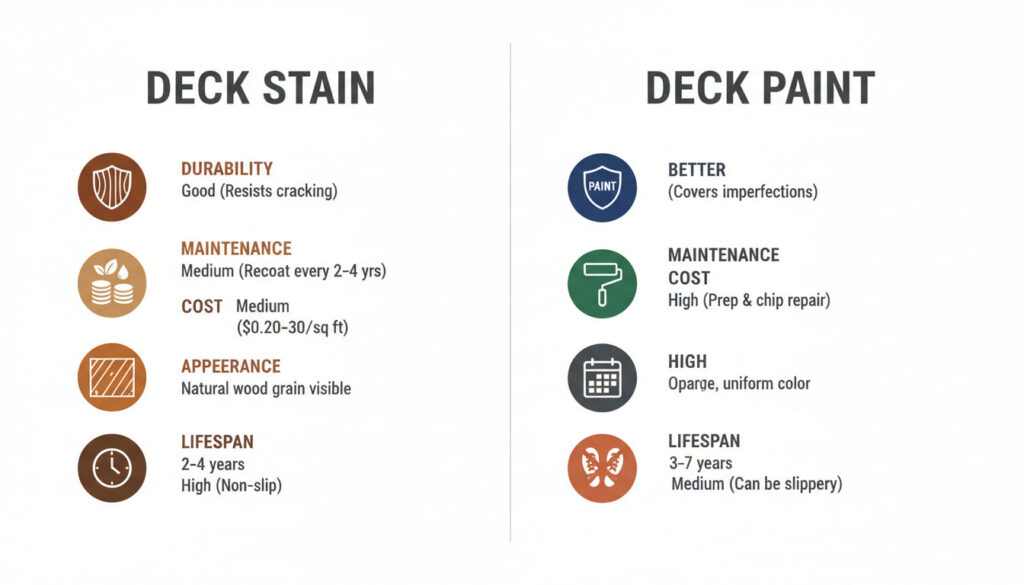
- Frequent re-coats: Transparent and semi-transparent stains fade faster. Plan to re-stain every 2–5 years, depending on sun and wear. You’ll need to re-seal periodically to keep the deck protected.
- Limited coverage: Stains won’t hide major flaws. Cracks, stains, or blotches in the wood will still be visible.
- Fewer colors: Stains come in wood tones and a few muted shades. You won’t get bright reds, blues, or pure whites with typical deck stains.
- Wood only: Stain only works on bare wood. If you have composite decking or an already-painted deck, you’ll need to use paint or a specialized coating instead.
Why Choose Paint?
Painting a deck means applying a thick, opaque coating on top of the wood. That has its own advantages:
- Wide color range: Paint comes in any color or sheen you want. You can match your deck to your home or go bold with a feature color. Unlike stains, paint lets you use grays, whites, blues, or any custom hue.
- Covers flaws: Paint completely hides the wood grain and imperfections. A painted deck can mask years of weathering and give an old deck a fresh look.
- Long-lasting wear: A high-quality deck paint (especially with primer) can protect for many years. In fact, deck paint can last up to 10 years before needing a redo, whereas stains usually need reapplication every 2–3 years.
- Smooth finish: Painted decks are slick and easy to clean. Dirt and pollen wash off more easily than on rough stain. You get a uniform, “finished” appearance.
- Versatile substrates: Paint can be used on non-wood decks (like composite, concrete, or metal) and any wood (with primer). If your deck is composite or was previously painted, continuing with paint is often the simplest option.
Drawbacks of paint:
- Peeling and cracking: Over time, painted decks often chip or peel. Even top-quality paint “sits on the surface” and can delaminate as wood swells and shrinks. When paint fails, you end up with large flakes that need scraping off.
- Heavy prep work: Painting requires a lot of preparation – cleaning, sanding, primers, and multiple coats. Forrest Paint’s guide shows that deck painting typically involves treating the wood, priming, painting, and even clear-coating. It’s far more labor-intensive upfront.
- Moisture trapping: If water gets under the paint film (through cracks or edges), it can’t escape and may cause rot or blistering beneath the surface.
- Slippery finish: Glossy paint can be slick when wet. (This can be mitigated with anti-slip additives, but it’s a concern especially around pool decks.)
- Paint commitment: Once you paint a deck, switching to stain later means stripping off all the paint first. You’re committed to a painted look unless you do a full sand-down.
How to Decide
Consider these factors when choosing between paint and stain:
- Deck condition: If the deck is new or in good shape, stain is usually best to protect and showcase the wood. If the deck is old, cracked, or heavily weathered, paint can cover the damage and refresh its appearance.
- Desired look: Do you want a natural, wood-enhancing finish or a solid color? Choose stain for a natural wood look, or paint for a bold, uniform color.
- Color options: Remember that stains come in wood-tone palettes, while paint has virtually unlimited colors. If you have a specific color in mind, paint is the way to get it.
- Maintenance willingness: Think about future upkeep. Stains need reapplication every few years but are easier to refresh (usually just cleaning and a quick recoat). Paint coatings last longer per coat, but when it’s time to redo, you’ll probably need to strip or sand before repainting.
- Climate: In Ohio’s humid summers and cold winters, allowing the wood to breathe can help prevent rot. A penetrating stain lets moisture escape, reducing peeling risk. In very dry, sunny areas, paint’s thick barrier also works well, but in our climate many pros prefer stain for decks.
- Wood type: Pressure-treated pine or cedar decks usually take stains nicely (after the wood has had time to dry). Freshly treated wood may need to weather for a while before staining. Composite decking can’t be stained, so paint (or a specialized composite coating) is required there.
- Budget: Staining is generally cheaper and quicker to apply. Painting (with primer and multiple coats) costs more in materials and labor, though it may require less frequent full re-application.
- Safety: Stained decks retain some natural texture for better traction. Painted decks tend to be very smooth, so keep anti-slip measures in mind if you go that route.
Preparation and Application
No matter which you choose, prep work is key. Start by thoroughly cleaning the deck (power-wash or scrub) to remove dirt, mold, or old finish. Let the wood dry completely. Scrape or sand off any peeling paint or stain. If you’re painting, apply a quality exterior primer before painting. If you’re staining, lightly sand or etch the wood so the stain penetrates evenly. Always apply paint or stain on a dry day with moderate temperature (not too hot or cold) for the best adhesion.
Conclusion
In most cases, staining your deck is the safer bet. It soaks into the wood and protects from moisture and sun damage without peeling. A well-stained deck shows off the grain and will hold up for years with periodic recoating. Painting the deck can give a striking new color or cover lots of flaws, but it requires more prep and will eventually chip. We suggest staining for new or sound decks, and saving paint for older decks or special color needs.
At Surecoat Painting, we’ve refinished hundreds of Ohio decks and often recommend oil-based stains for longevity and a natural look. If your deck needs a bold makeover or you prefer paint, we can also apply premium deck paint and primer. Contact Surecoat Painting for expert advice or service. With the right choice and care, your deck will stay beautiful for many seasons to come.