
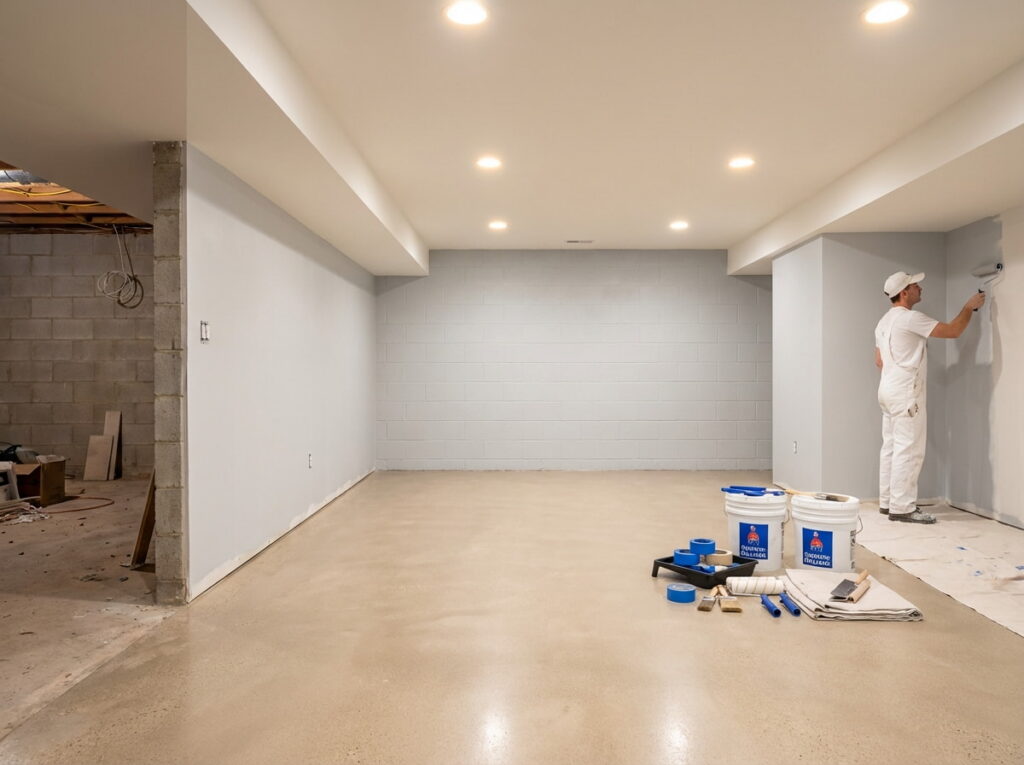
Looking for a basement painter in Columbus? SureCoat Painting handles everything from raw concrete block and drywall to finished rec rooms and home gyms. We specialize in the prep work that makes basement paint actually stick — moisture treatment, surface repair, proper priming, so your finished space looks great for years, not months.
Basements are one of the trickiest spaces to paint well. Unlike a bedroom or living room, they come with unique challenges: concrete and block walls that breathe moisture, inconsistent lighting that makes color choices harder, and surfaces that punish shortcuts quickly. Most DIY jobs in basements start peeling within a year because the prep was skipped.
At SureCoat, we’ve been painting basements across Central Ohio since 1994. We know what works here, in this climate, on these surfaces. Here’s everything you need to know before booking a basement painting project.
What We Paint in Your Basement
Every basement is different. Some are raw storage spaces with exposed block walls and utility pipes. Others are finished rooms with drywall, trim, and ceilings that just need refreshing. We handle all of it.
| Concrete & block walls Poured concrete, cinder block, and stone — treated for moisture, primed and painted for a clean finish. | Drywall & finished walls Finished basement rooms with drywall get full interior treatment — patching, sanding, and clean paint lines. |
| Ceilings & exposed joists Open ceilings with pipes and joists, drop ceilings, or drywalled ceilings including utility black finishes. | Trim, doors & stairwells Baseboards, door frames, and stair rails finished to match or contrast for a polished, complete look. |
| Basement floors Concrete floor coatings, epoxy, and paint systems that resist moisture, scuffing, and everyday foot traffic. | Unit turnover & rental prep Landlords and property managers: we repaint basement units quickly between tenants, on schedule, every time. |
Why Basement Painting Is Different (And Harder Than It Looks)
Here’s what most painters won’t tell you upfront: a basement that isn’t properly prepared before painting will fail, it’s not a matter of if, it’s when.
Columbus basements deal with clay-heavy soil that holds moisture, seasonal humidity swings, and below-grade concrete that naturally wicks water from the ground. Apply regular paint to an untreated block wall and it will bubble, peel, or grow mildew within a season. That’s not a paint brand problem. That’s a preparation problem.
Our Basement Painting Process
1. On-site consultation & assessment
We inspect the basement in person looking for moisture intrusion, efflorescence, existing paint condition, and surface type. We don’t quote over the phone because every basement is genuinely different.
2. Surface preparation
Wire brushing, pressure washing if needed, scraping loose paint, filling cracks with hydraulic cement or patching compound, and sanding smooth. This is where the real work happens.
3. Moisture treatment
For concrete and block walls showing signs of moisture, we apply a masonry waterproofer or sealer before any paint goes on. Skipping this step is the #1 reason basement paint fails.
4. Priming
The right primer for the surface type — masonry primer for concrete walls, drywall primer for finished spaces, bonding primer for tricky surfaces. Never skipped, even on repaint jobs.
5. Paint application
We use premium-grade paints suited for the basement environment — moisture-resistant formulas for concrete, durable interior coatings for finished rooms. Applied by brush, roller, or spray depending on the surface.
6. Post-job walkthrough
We walk the finished space with you before we leave. If anything needs touching up, we do it on the spot. We don’t consider the job done until you’re satisfied.
Choosing the Right Paint for Your Basement Surface
Not all basement surfaces are the same, and not all paints are right for every surface. Here’s a quick guide to what we typically recommend.
| Surface | Recommended approach |
| Bare concrete block | Masonry waterproof paint (e.g. Drylok or equivalent) after sealing creates a moisture-resistant film that stops water vapor from pushing through. |
| Poured concrete walls | Elastomeric masonry paint for flexibility, or a two-part epoxy system for durability. Requires thorough prep, etching, or bonding primer. |
| Finished drywall | Moisture-resistant interior paint (satin or eggshell finish) over drywall primer. Same standards as any above-grade interior room. |
| Exposed ceiling/joists | Flat black or flat gray interior paint — good adhesion required to bare wood and metal. Spraying is the most efficient application method. |
| Concrete floors | Epoxy floor coating or 100% acrylic concrete floor paint after acid etching. Needs 24–72 hours cure time before foot traffic. |
Why Columbus Homeowners Choose SureCoat Painting
| 30+ Years in Central Ohio We know Columbus basements — the clay soil, seasonal humidity, and moisture challenges that make this market different from anywhere else. | No Subcontractors. Ever. Every job is done by our own trained crew. You get the same quality and accountability on day one and day five of your project. |
| Free On-Site Estimates We come to you, assess the actual space, and give you a transparent quote with no hidden fees. No phone quotes for basement work. | Fast Turnaround for Landlords Property managers trust us to turn basement units quickly and consistently. We understand that vacant days are lost revenue. |
Frequently Asked Questions
How much does basement painting cost in Columbus?
Basement painting costs vary based on size, surface type, current condition, and how much prep work is needed. A basic unfinished basement with concrete block walls will cost differently than a fully finished basement with drywall, trim, and ceilings. We always provide a free on-site estimate so you know exactly what you’re paying for before any work begins.
How long does basement painting take?
Most basement painting projects take 1 to 3 days, depending on size and complexity. Concrete surfaces need more dry time between coats, and moisture treatment adds time if needed. We’ll give you a realistic timeline during your estimate, we’d rather set accurate expectations than rush a job.
Do I need to do anything to prepare before you arrive?
Ideally, clear the area of stored items and furniture so we have open access to all walls and surfaces. If the basement has a moisture or flooding history, let us know upfront. We handle all the actual surface preparation as part of the job.
Can you paint a basement that has had water problems?
Yes, but we need to assess it first. Active water intrusion needs to be resolved before painting, paint is not a waterproofing solution. For basements with past moisture issues that have been addressed, we can apply the right masonry sealers and waterproof paint systems that significantly resist moisture vapor.
What’s the best paint color for a basement?
Lighter, warmer colors generally work best in basements because they brighten naturally dark spaces. Soft whites, warm grays, and warm beiges are popular in Columbus homes. We’re happy to walk through options with you during the estimate.