
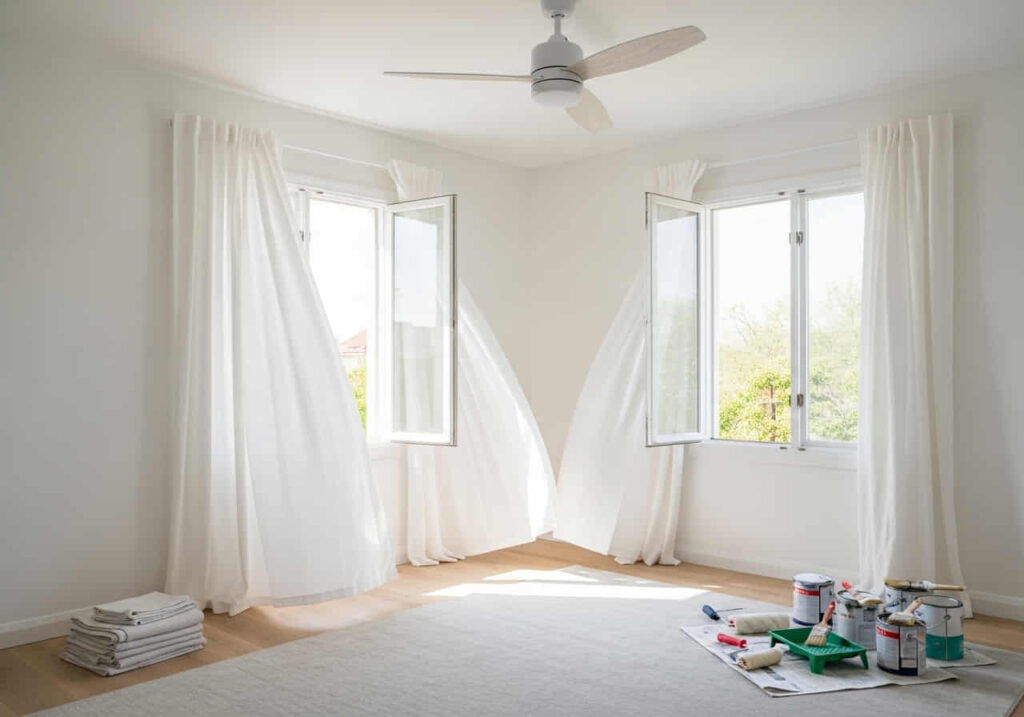
When you finish painting a bedroom, you’ll want to know when it’s safe to return. Experts recommend waiting at least 24 hours (and ideally up to 72 hours) before sleeping in a freshly painted room. This gives the paint time to off-gas, and it lets you ventilate the space so fumes don’t build up. In simple terms: don’t rush back right away. Even if the walls feel dry to the touch, they may still be releasing paint vapors (volatile organic compounds, or VOCs). By waiting a day or more and keeping windows open, you protect your health and give the paint a chance to cure safely.
Fresh paint fumes may smell pleasant, but they can cause headaches, sore throats, or worse if you inhale them all night. Paint contains chemicals (VOCs) that evaporate into the air as it dries. Doctors and building experts agree that these fumes can irritate your eyes, nose, throat or lungs. In fact, the U.S. EPA advises providing maximum ventilation during and at least 72 hours after painting. If you feel dizzy or sniffle when the room still smells like paint, that’s a sign to stay out longer. It’s better to be safe and sleep elsewhere (or on the couch) for a couple of nights.
Why Wait to Sleep in a Freshly Painted Room?
The main reason to wait is ventilation and curing time. Even “dry” paint can keep off-gassing invisible fumes. As one expert put it, “dry to touch” doesn’t mean safe – different paints and room conditions affect how long fumes linger. For example, oil-based paints release chemicals like benzene and formaldehyde that can take far longer to evaporate than modern water-based latex paints. A doctor quoted in House Beautiful magazine advises waiting about 72 hours (three days) after an oil-based or heavy coat of paint before sleeping in the room. For typical water-based or “acrylic” wall paints (which have much lower VOC levels), people often start to feel better after a day if the room is well-aired out, but 24–48 hours is still wise for sensitive folks or thick coats. In short, the paint’s curing time is the key: allow the chemicals to dissipate before making the room your bedroom again.
Paint Types and Drying Times
Different paints need different waiting times. Here are general guidelines:
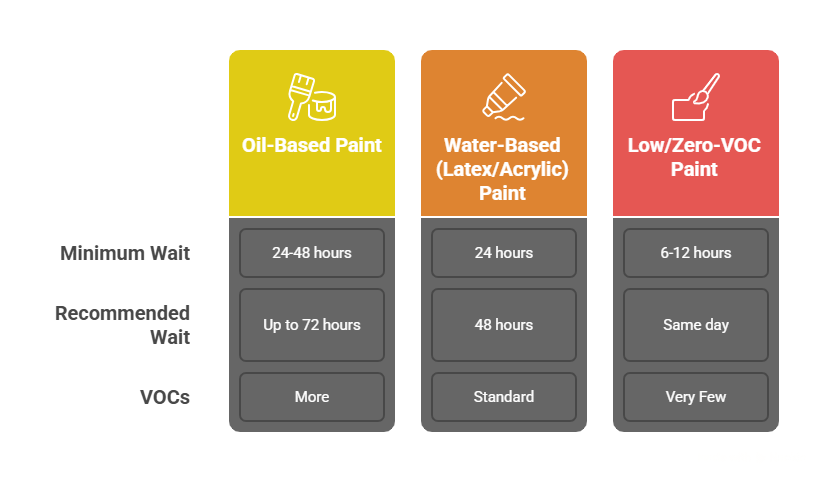
- Oil-based paint – These take the longest to off-gas. If you used oil-based paint (even on trim or cabinets), plan on at least 24–48 hours, and some experts say up to 72 hours, before sleeping in the room. Oil paints have more VOCs and a strong odor, so they need extra airing out.
- Water-based latex/acrylic – Most home interior paints today are latex or acrylic. They dry faster (often in a few hours), but they still emit fumes for a while. Usually you can return after 24 hours if you’ve ventilated well, though waiting 48 hours is safer if the smell is strong.
- Low-VOC or Zero-VOC paint – These special paints release very few chemicals. In many cases, you could sleep in the room the same day the paint is applied, once it feels dry. However, it’s still smart to air the room out and maybe wait 6–12 hours to be sure, especially if you smell any odor. Low/zero-VOC paints are recommended by contractors and health experts if you need a quicker turnaround.
- Tinted/mixed paint – Note that mixing colors or adding pigments can increase VOC levels slightly. If the paint can label shows extra additives or a strong scent, err on the side of caution and wait longer.
In practice, most people breathe easy in a well-ventilated bedroom after 24–48 hours. But if you painted late in the day, consider sleeping elsewhere the first night. And remember: “If you can still smell it, it’s not fully gone.” Give it more time.
Ventilation and Safety Tips
The best way to speed up drying and stay safe is fresh air. Keep windows and doors open for several hours (and up to a few days) to flush out fumes. Set up fans to blow air out of the room, which pulls fresh air in. Running the air conditioner or a dehumidifier also helps, since dry air accelerates paint cure.
- Ventilate for at least 72 hours. The EPA’s official guidance for home renovation projects (which includes painting) is to keep the space ventilated during the work and for at least 3 days afterward. Even if the smell is faint, continue running a fan or opening windows each day until the paint is fully cured.
- Use fans wisely. Position a fan by a window or door to blow air out; this creates a “flow-through” that carries vapors outside. Another fan can bring fresh air in from outside.
- Check humidity and temperature. Paint dries fastest at moderate room temperature (around 65–80°F) and low humidity. If it’s cold or damp, it may take longer to dry. Try to paint on a dry day or use a heater/AC to control the climate.
- Choose low-VOC products. As mentioned, modern low-VOC or zero-VOC paints (often labeled as such) dramatically reduce fumes. This means you can usually return to the room sooner. Always check the paint label: many latex paints today are virtually odor-free.
- Safety for special cases. People with asthma, allergies, or chemical sensitivities should wait even longer and ventilate extra. The CPSC/EPA note that such vulnerable individuals (including pregnant people) should especially avoid newly painted spaces. If you fall into one of these groups, consider staying out of the room for a full 72 hours or longer.
Once the paint smells faint and the room has been aired out, you can safely move back in. In the meantime, keep dust sheets or a fan running. Don’t replace bedding, move furniture in, or let anyone sleep there until the fumes are gone. Even a small odor means trace chemicals are still in the air.
Key Takeaways
- Wait 24–72 hours: As a rule of thumb, give fresh paint at least one full day before returning, and ideally up to three days. The exact time depends on paint type and how well you’ve ventilated.
- Ventilate thoroughly: Open windows, run fans, and if possible use AC/dehumidifiers for the first few nights. This removes VOCs and lets paint cure normally.
- Use low-odor paints: If sleeping soon is critical, choose low-VOC or no-VOC paints. These let you re-enter sooner.
- Trust your senses: Your nose is a great guide. If you still smell paint, give the room more time. Symptoms like headache or nausea mean you should stay out longer.
- Protect others: Keep children, pregnant women, and pets away until the room is well aired. Their lungs are more sensitive to paint fumes.
In summary, the healthiest approach is patience. Waiting the extra day or two is a small trade-off for safety and a better finish on your walls. Following these tips ensures that when you finally sleep in that freshly painted room, you’ll breathe easier and sleep soundly.