
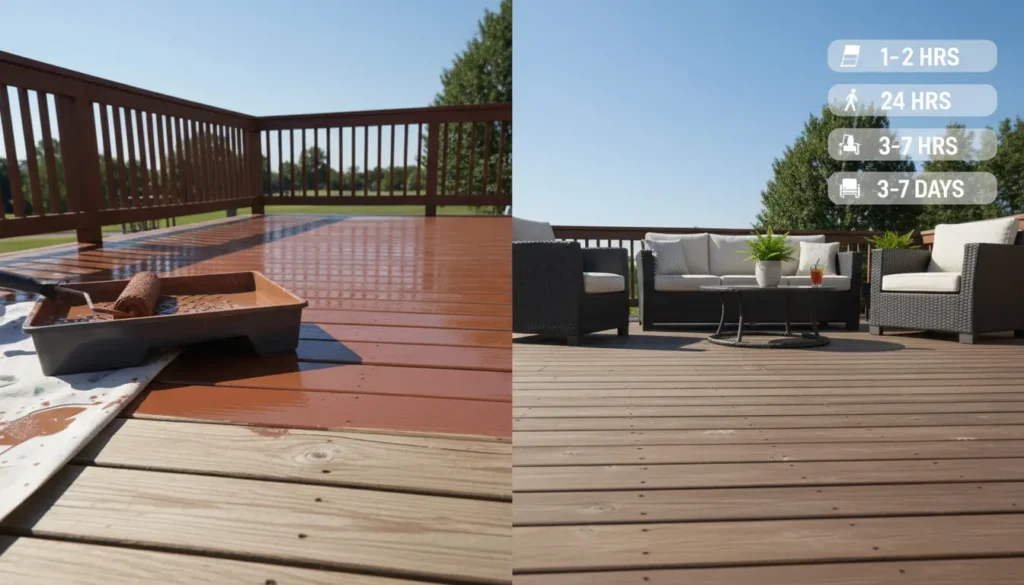
Deck paint dries faster than you might think, but you still need patience. In warm, dry weather, most water-based (latex) deck paints will feel dry to the touch in about 1–2 hours, whereas oil-based enamels can take around 6–8 hours. However, touch-dry is only the first stage. Experts recommend waiting about 24 hours before walking on a freshly painted deck, and 48–72 hours before replacing heavy furniture. In fact, many painters advise giving the surface roughly 3–7 days to fully cure before subjecting it to heavy use. In short, expect ~1 day for light foot traffic and up to a week for full cure (see timeline below).
- Dry to touch: ~1–2 hours (latex) or ~6–8 hours (oil).
- Recoat (between coats): ~4–6 hours for water-based paints, ~24 hours for oil-based.
- Light foot traffic: ~24 hours in ideal conditions.
- Heavy use (furniture, planters): 48–72 hours.
- Full cure (maximum hardness): ~3–7 days (even up to 30 days for some latex paints).
Dry vs. Cured: “Dry to the touch” means the paint no longer feels tacky, but it isn’t fully hardened yet. Most paints continue curing for days or weeks. For example, latex exterior paints can take up to 30 days to reach full strength. During this curing period, the finish is still soft – so avoid scrubbing, pressure-washing, or heavy loads. As one pro tip notes: press lightly with a fingernail on the dried surface – if it dents easily, give it more time.
What Affects Deck Paint Dry Time?
Several factors can speed up or slow down drying:
- Temperature & Humidity: Warm, dry air is best. Daytime temps of ~50–85 °F with low humidity help paints set quickly. High humidity or cold weather (<50 °F) can double or triple drying time. Avoid painting in the rain or if rain is expected within 24–48 hours.
- Sun & Wind: Direct sun and a light breeze can help evaporate solvents, speeding up the surface drying. But very hot, direct sun can cause the paint’s surface to skin over too fast, trapping moisture underneath (which leads to bubbling or poor adhesion). Aim to paint midday when temperatures are warm but not scorching, and with good airflow.
- Coat Thickness: Thicker coats take much longer to dry. Apply paint in 2 thin coats rather than one heavy layer. This lets each coat dry fully.
- Wood Condition: New or pressure-treated wood often has trapped moisture. Make sure the deck is completely dry before painting (wait at least 24–48 hours after a power wash or rain). Damp wood will slow drying and may cause adhesion problems. Older, weathered wood may absorb more paint unevenly, but generally dries faster than newly treated lumber.
- Ventilation: Good air circulation is vital. If your deck is under cover or you’re painting near walls, use fans or natural breeze to move air over the surface. Stagnant air will slow solvent evaporation. In short: more airflow = faster drying.
Tips for Best Results
- Prep and Wait: Clean your deck thoroughly (remove dirt, mildew). Let it dry 1–2 days after cleaning before you paint. Never paint on a wet deck. Check the weather – pick a sunny, dry window with no rain for at least a day or two.
- Choose the Right Paint: For decks, water-based acrylic/latex deck paints are popular because they dry quickly and clean up easily. Oil-based deck enamels (or solid stains) give a hard finish but take longer to dry. Either way, use a paint formulated for exterior decks and porches – these are made to handle weather and foot traffic.
- Apply Thin Coats: Use a brush or roller to lay down an even, thin coat. Avoid puddles or drips. Give each coat the manufacturer’s recommended time to dry before recoating (often 4–6 hours for latex, ~24 hours for oil). Typically two coats is ideal.
- Daytime Painting: Start painting in the morning. This ensures the paint has all day to dry before the evening dew or cooler temperatures arrive.
- Stay Off the Deck: Keep people and pets off the deck for at least 24 hours. If you must walk on it sooner, use bare feet to avoid scuffing (shoes can imprint or remove soft paint). One source suggests waiting 24–48 hours before light foot traffic.
- Check and Give Extra Time: After a day, lightly touch the surface. It should feel hard, not tacky. If a fingernail leaves an indent, it needs more time. If in doubt, err on the side of patience – it’s better to wait an extra day than to discover peeling or damage later.
With these steps, you’ll ensure a durable finish. In summary: water-based deck paints usually dry to touch in a couple of hours, oil-based in several hours, but the safe use intervals are much longer. Plan for about 1 day before walking on the deck, and 2–3 days (or even a week) before heavy items or full curing. This way your fresh deck coating will stay looking great and last for seasons to come.