
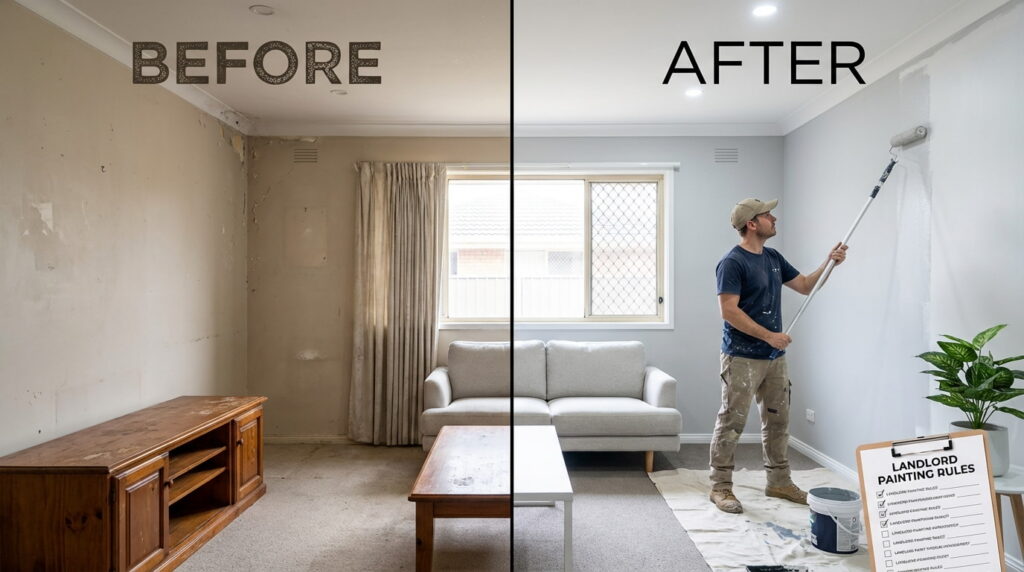
In Ohio, there is no law that forces a landlord to repaint on a fixed schedule. Most landlords repaint every 3 to 5 years, or between tenants, to keep the unit in good condition. If the paint is peeling, chipping, or creating a health hazard, however, the landlord is legally required to fix it — regardless of how long it has been.
If you just moved into a new apartment and the walls look like they belong in a haunted house, you’re probably wondering whether your landlord is supposed to repaint. Or maybe you’re a landlord yourself, trying to figure out what the law actually requires of you.
Either way, this guide breaks it down clearly — no legal jargon, no guessing. Let’s walk through exactly what the rules are, when repainting becomes a landlord’s responsibility, and how you can protect yourself whether you’re renting or managing a property.
Does Ohio Law Set a Repainting Schedule?
No, it doesn’t. Ohio does not have a state statute that says “landlords must repaint every X years.” That specific type of rule doesn’t exist at the state level.
What does exist is a broader requirement: landlords must keep their properties habitable. That means safe, clean, and in decent working order. Paint falls under this umbrella but only when it becomes a problem, not simply because time has passed.
Some local cities or counties may have stricter housing codes that do specify maintenance timelines. It’s always worth checking with your local housing authority, especially in larger metro areas.
So When Does a Landlord Actually Have to Repaint?
Think of it this way: the law isn’t concerned with cosmetics. A wall that looks dingy after years of normal living isn’t a legal issue. But there are specific situations where a landlord’s obligation to repaint or at least address the paint becomes clear.
| When it’s a health hazard | Lead paint or severe peeling Chipping or flaking paint in pre-1978 buildings may contain lead. Federal law requires landlords to disclose lead paint hazards, and any deteriorating lead paint must be addressed promptly, this isn’t optional. |
| When it affects habitability | Mold, moisture, or structural damage If the paint is failing because of a water leak, mold, or structural issue, the landlord must fix both the underlying problem and the resulting paint damage. |
| Between tenants | Standard turnover practice Most responsible landlords repaint between tenants. It’s not always legally required, but it’s the industry standard and it helps avoid disputes over what counts as normal wear and tear. |
| After 4–5+ years | Normal wear and tear threshold Over long tenancies, scuffs, fading, and minor marks are considered normal. These are typically the landlord’s responsibility to fix, not something that can be charged to the tenant’s security deposit. |
What Counts as “Normal Wear and Tear” vs. Damage?
This is where most landlord-tenant disputes around painting happen. Understanding the difference can save you from a security deposit fight.
| Landlord’s Responsibility › Faded or yellowed walls from age › Minor scuffs from furniture › Small nail holes from hanging pictures › Gradual color wear over years › Paint that peels due to building issues | Tenant’s Responsibility › Large holes or gouges in drywall › Crayon or marker writing on walls › Unauthorized paint colors › Stains from smoke or pet damage › Extensive damage beyond normal use |
The longer someone lives in a unit, the more latitude they generally get for wear and tear. A tenant who lived in a place for five years shouldn’t be charged for a fresh coat of paint as part of normal upkeep, that’s the landlord’s cost of doing business.
The 3–5 Year Rule: Where Does It Come From?
You’ll often hear that apartments should be repainted every 3 to 5 years. This isn’t a legal rule, it’s an industry standard based on how long interior paint realistically holds up under normal living conditions.
| High-traffic areas 2–3 yrs Kitchens, hallways, entryways | Low-traffic rooms 4–5 yrs Bedrooms, living areas |
Paint in kitchens and bathrooms gets exposed to grease, steam, and cleaning chemicals — it wears out faster. Bedrooms might look fresh for years if the tenant is careful. So “every 3–5 years” is a guideline, not a stopwatch.
What Should You Do If Your Apartment Needs Painting?
If you’re a tenant and your walls are genuinely in bad shape not just aesthetically faded, but peeling, stained from a leak, or showing signs of mold, here’s the smart way to handle it.
- Document the condition with dated photos before saying anything
- Send a written request to your landlord describing the issue specifically
- Keep a copy of every communication – texts, emails, letters
- Check your lease for any maintenance or painting clauses
- Contact your local housing authority if the issue affects habitability and is ignored
A written paper trail protects you. Verbal conversations are easy to deny; documented requests are not. If paint issues are creating a genuine health or safety problem especially in older buildings, your landlord is legally obligated to act.
Conclusion
No law in Ohio forces a landlord to repaint your apartment on a set schedule. But that doesn’t mean landlords have zero responsibility. If paint is deteriorating in a way that affects health, safety, or habitability, it must be addressed.
For everyone else, the practical standard is every 3 to 5 years, with repainting between tenants being the professional norm. Whether you’re a renter documenting an issue or a property owner protecting your investment, understanding these distinctions keeps you on solid footing. And if you’re a landlord who’s due for a refresh, quality paint work is one of the best returns you’ll get per dollar spent on your property.
Frequently Asked Questions
Can my landlord charge me for repainting when I move out?
Only if the damage goes beyond normal wear and tear. Routine fading or minor scuffs after a multi-year tenancy can’t legally be charged against your deposit. If you painted walls an unauthorized color or caused significant staining, that’s a different story.
My landlord hasn’t painted in 7 years. Is that a violation?
Not automatically. Ohio law doesn’t set a specific repainting timeline. However, if the paint is deteriorating to the point where it affects habitability — peeling heavily, showing mold, or containing lead that does become a legal issue the landlord must address.
Can I paint my apartment myself?
Only with written permission from your landlord. Most leases prohibit tenants from painting without approval. If you do get permission, make sure you get it in writing and agree on whether you’ll need to restore the original color before moving out.
What if my city has stricter painting rules than state law?
Local ordinances can and sometimes do go further than state law. Some municipalities require repainting after a set number of years or between every tenant. Check with your local housing authority or city code enforcement office to find out if stricter rules apply in your area.
Does lead paint change the rules?
Yes, significantly. Federal law (the Residential Lead-Based Paint Hazard Reduction Act) requires landlords in pre-1978 buildings to disclose known lead paint hazards and provide tenants with an EPA pamphlet. Any deteriorating lead-based paint must be addressed promptly — this is a federal obligation, not just a state one.