

In short: usually not. A landlord generally cannot charge you for repainting that’s needed from normal wear and tear. For example, faded or lightly chipped paint over time is typically the landlord’s responsibility. You only owe painting charges if the walls need fresh paint due to something you did. For instance, leaving big holes, heavy stains, graffiti, or painting the walls in an unapproved color may lead to repainting costs taken from your deposit.
When a landlord can charge for painting
A landlord may charge (or withhold deposit funds) for repainting if the need arises from damage or unauthorized changes:
- Damage beyond normal wear: Examples include large holes, gouges, smoke or pet stains, or crayon/marker drawings. If you leave walls needing repair and repainting (beyond simple touch-ups), the landlord can bill you.
- Unauthorized painting or color changes: If you painted the walls without permission or used a bold color the landlord must undo, you may have to restore the original. LawDepot explains that landlords “can only use a security deposit to pay for painting costs when a tenant has painted over the original color or damaged the walls”. Likewise, Zumper advises that if you paint without permission or don’t repaint to the agreed color, your landlord can deduct the repainting cost from your deposit.
- Severe neglect or dirt: If the walls are extremely dirty, moldy, or stained from neglect (far beyond normal use), repainting might be considered necessary damage. For example, a landlord can charge if walls are “filthy” or have an “excessive build-up of dirt” that needs fresh paint.
As Zumper advises, always get written permission before painting and confirm any rules about color. Otherwise, a landlord can charge you to repaint the walls back to their original neutral shade.
When a landlord cannot charge for painting
Landlords cannot charge you for routine repainting that comes from normal use of the rental:
- Minor wear and tear: Small scratches, nail holes from picture hooks, or faded paint over time are normal. Maryland law notes tenants aren’t responsible for fixing ordinary wall aging – a landlord “cannot keep a portion of a security deposit to paint over a small scratch”. These tiny marks are generally landlord maintenance.
- Scheduled repainting: If you’ve lived in the unit long enough that it naturally needs a new coat, that’s usually the landlord’s job. DoorLoop points out that if a tenant stayed 3+ years, repainting is routine maintenance and not charged to the tenant. Zumper similarly says if the walls simply need a refresh due to time (and you followed the lease), the landlord should not charge for that painting.
For example, California guidelines say a landlord can fix a hole but “cannot charge for repainting the entire unit if the damage was just from normal wear”. In short, standard repainting is on the landlord, not you.
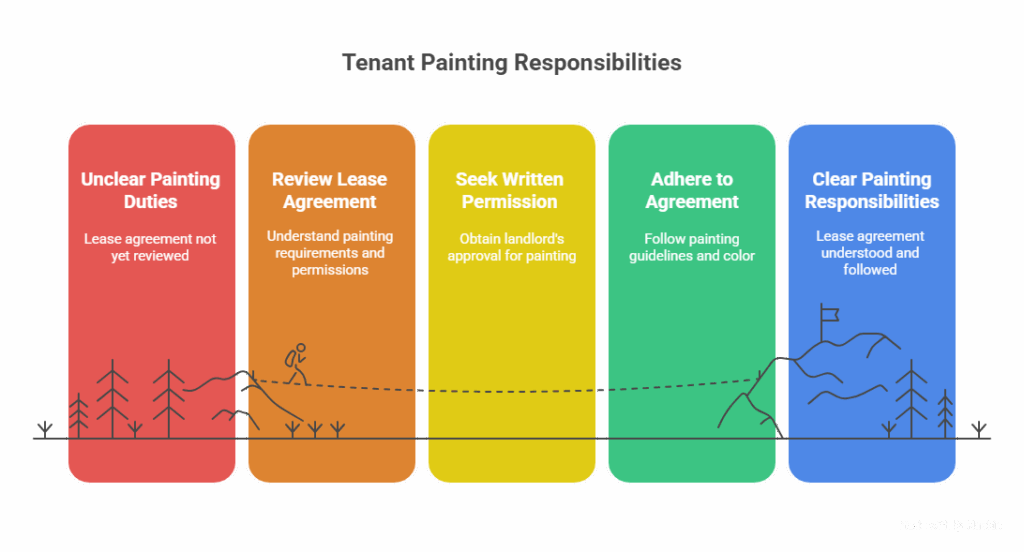
What your lease says
Your lease agreement is the final word on painting duties. Read it carefully:
- If the lease requires you to paint or repair marks, then you’re expected to do it. For instance, a Maryland tenant guide warns that if a lease “requires the tenant to repair or paint over any marks left on a wall,” then you must do that before moving out to avoid deposit deductions.
- If you want to paint, get written permission. Many landlords will allow tenant painting only if you agree in writing to repaint the walls back to the original color before you leave.
- Even if the lease doesn’t mention paint, normal wear-and-tear rules still apply. The landlord can’t charge you for routine painting unless the lease explicitly says so.
How to protect yourself
Prevent disputes by documenting and communicating:
- Review the lease and get approvals: Know any rules about changes and ask what’s allowed. If you plan to paint, confirm in writing first.
- Take move-in/move-out photos: Document the walls and overall condition when you move in and again before you leave. Dated photos can prove the original state.
- Communicate clearly: Let the landlord know about any repairs you plan. Follow up in writing (email, text) so there’s a record of any agreements on painting or fixes.
- Request an inspection: Some states allow a pre-move-out walkthrough. (For example, California tenants can request a pre-move-out inspection and list of fixes to avoid unexpected charges.)
- Ask for receipts: If your landlord deducts painting costs, request an itemized list and copies of receipts. Many laws require landlords to provide receipts for significant repair or paint expenses.
By understanding normal wear versus damage and following your lease, you can usually avoid unfair painting fees. If a charge does appear on your bill, you can dispute it by citing normal wear standards and the lease terms you followed.
Disclaimer: This article is informational, not legal advice. Laws vary by state, so check local regulations or consult an attorney for guidance. For a deeper understanding of your rights and responsibilities, read our guide on whether a landlord can charge for painting after a tenant moves out.