
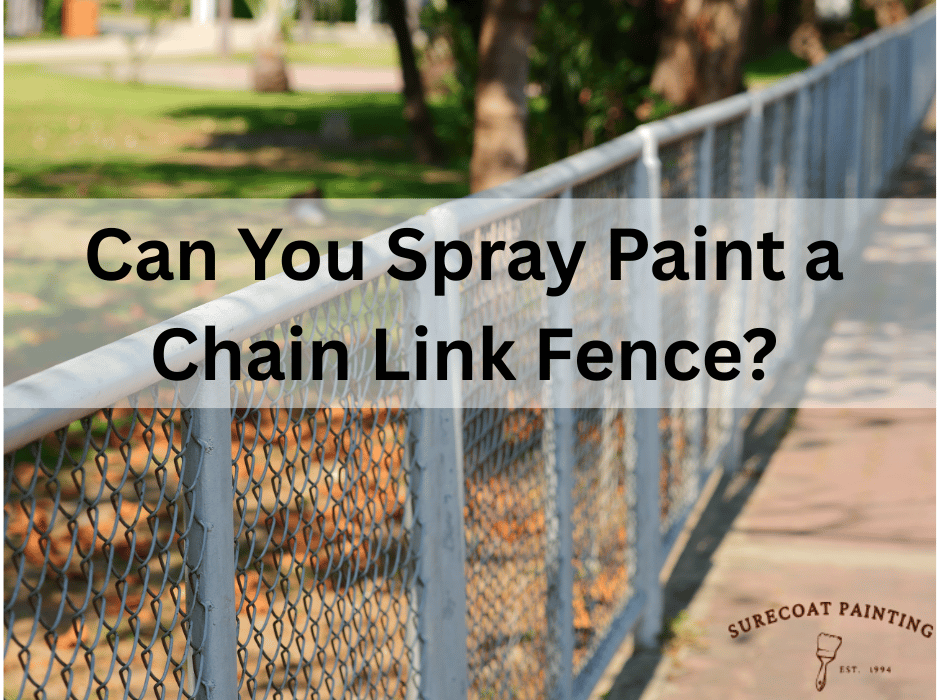
Yes – you can spray paint a chain link fence, but it takes some prep. Chain link fences are usually galvanized steel (shiny silver) or powder-coated metal, which resists rust but doesn’t let paint stick without work. To get a smooth, durable finish, you should first clean the fence thoroughly and apply a metal primer. With the right primer and a good exterior spray paint, even large wire-mesh fences can be sprayed with great results. In short: prepare and prime first, then spray on thin, even coats of paint. The steps below explain how to do it safely and effectively.
Prepare the Fence
Before spraying, remove dirt, rust, and anything loose that would prevent paint from sticking. For example, one pro guide recommends power-washing or scrubbing the fence to remove all dust and old paint flakes. Using a wire brush or sandpaper, scrape off rust spots until bare metal is visible. Treat any stubborn corrosion with a rust-inhibiting solution or a quick spray of zinc-rich primer (a galvanizing compound) before painting. Also protect the area: lay drop cloths or tarps on the ground and cover nearby plants and structures, since spray paint can drift and overspray onto everything.
- Power-wash or scrub the fence to remove dirt, dust and flaking paint. A clean surface helps the new paint stick.
- Scrub away rust with a wire brush or sandpaper. For heavy rust spots, apply a zinc-rich spray primer first (this helps stop corrosion).
- Cover nearby grass, walkways, and vegetation with cloths or plastic to catch overspray. Spray paint can travel, so protect anything you don’t want painted.
Apply Primer
Galvanized chain link metal needs a special primer so the paint will adhere. Use a rust-inhibiting metal primer – ideally one labeled for galvanized or outdoor metal. Apply it evenly over the entire fence (posts, rails, and wire mesh) before the topcoat. As chain link experts advise, an oil-based or zinc-rich primer designed for metal will “encourage the fence paint to stick longer”. You can use either a spray primer or a brush-on primer, but spraying is usually easiest on the thin wires. After priming, let it dry fully (often 24 hours) before painting.
- Choose a primer formulated for metal (especially galvanized steel). This creates a bond layer for your paint.
- Spray or roll a thin coat of primer on the fence, covering all surfaces. It’s okay if the primer color isn’t your final color – it just helps later coats stick.
- Allow the primer to dry completely according to the label (typically several hours to a day). Do not paint on wet primer.
Spray Paint the Fence
Now you’re ready for color. Use an exterior metal spray paint (such as an acrylic or enamel formula rated for outdoor use). Spray painting is often recommended because it covers the open mesh faster and more evenly than brushing. When spraying, keep the can about 12–18 inches from the fence and move in steady, overlapping sweeps to avoid drips. Aim to coat both sides of the fence: spray from the “front” and then walk around and do the back. Also spray from above and below when you can, so every link and post gets paint.
- Shake the paint can well and test the spray pattern. Use smooth side-to-side strokes, overlapping each pass, to apply paint evenly.
- Work in small sections (about 4–6 feet of fence at a time). Spray the front side first, then move to the backside of that section. This ensures complete coverage of the mesh wires.
- Keep the can moving to avoid heavy build-up. Several thin coats are better than one thick coat. Aim to lightly mist the fence on each pass.
- Apply at least two coats of paint, letting the first coat dry (usually 1–4 hours) before the second. This double-coat approach gives durability and hides streaks.
Remember to wear a mask or respirator and eye protection while spraying. Choose a calm, dry day (temperatures 50–85°F) to paint, and avoid very windy or rainy conditions. Light wind could blow spray off-target, and high humidity can slow drying.
Finishing Touches
After spraying, let the fence dry fully (often overnight) before touching it or exposing it to rain. Inspect for any missed spots or thin areas. If you see gaps, simply touch them up with more spray paint. Once satisfied, remove the drop cloths and clean any stray paint drips. Dispose of used paint cans safely and wash any brushes or tools used on primer.
With proper preparation and technique, your chain link fence can look like new. In the image above, a fresh coat of black paint has given the fence a uniform, clean finish. The paint not only enhances curb appeal but also seals the metal against future rust. As fence professionals note, painting a chain link is “a great way to refresh its appearance and protect it from rust”. Follow the steps above and your spray-painted fence should stand up nicely for years with very little maintenance needed.
Key Tips: Always use a primer for galvanized metal; spray thin, even coats; and protect the surrounding area from overspray. By taking these precautions, you’ll get a long-lasting, professional-looking result when you spray paint your chain link fence.